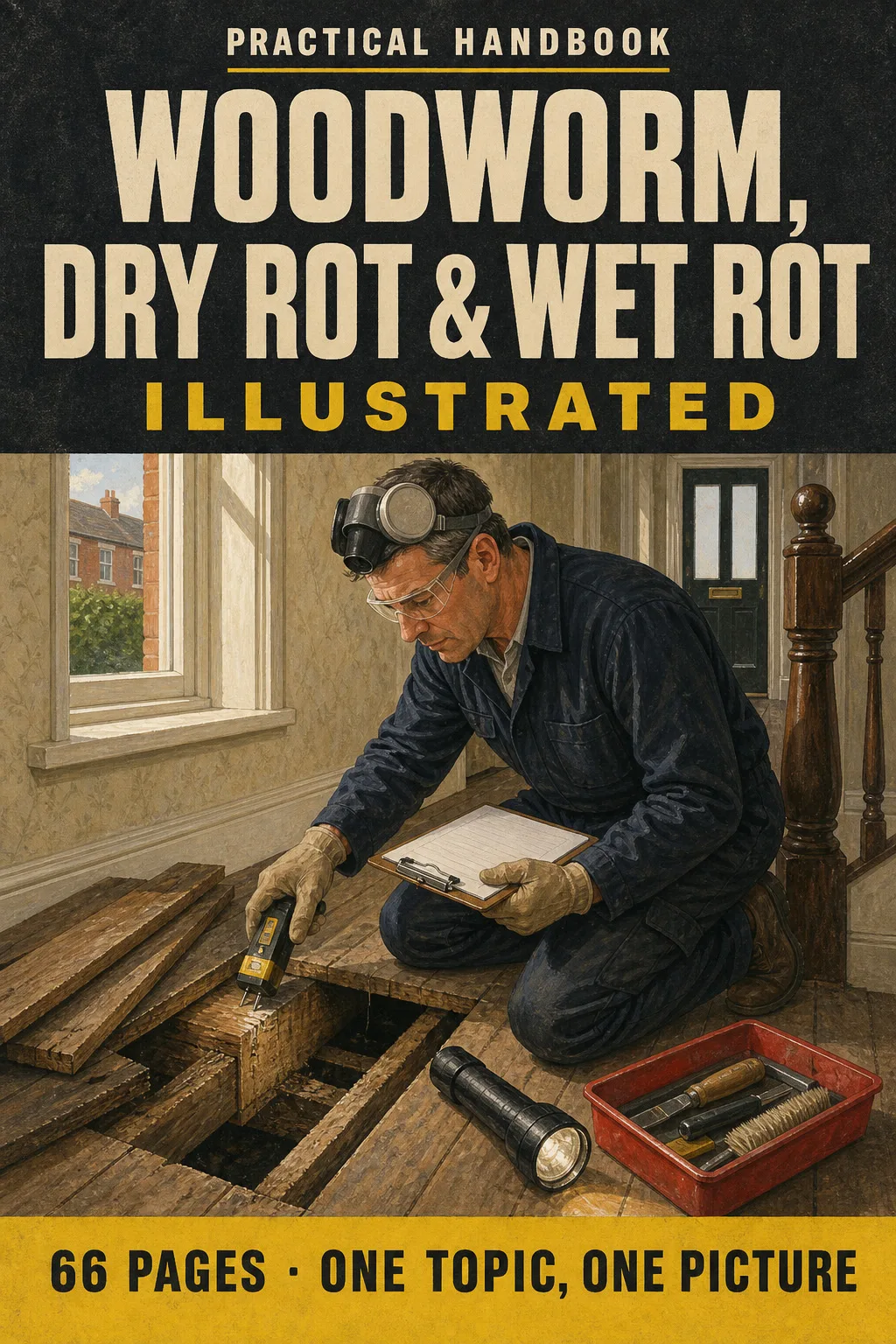
📄 Digital book in PDF · read it on your phone or print it
Old or active woodworm? Wet rot or dry rot? Where's the damp coming from, and when should you stop and call someone? Every topic has its own page: the drawing first, then what you need to remember. 66 illustrated pages.
🔒 Secure checkout · PDF by email · 30-day guarantee
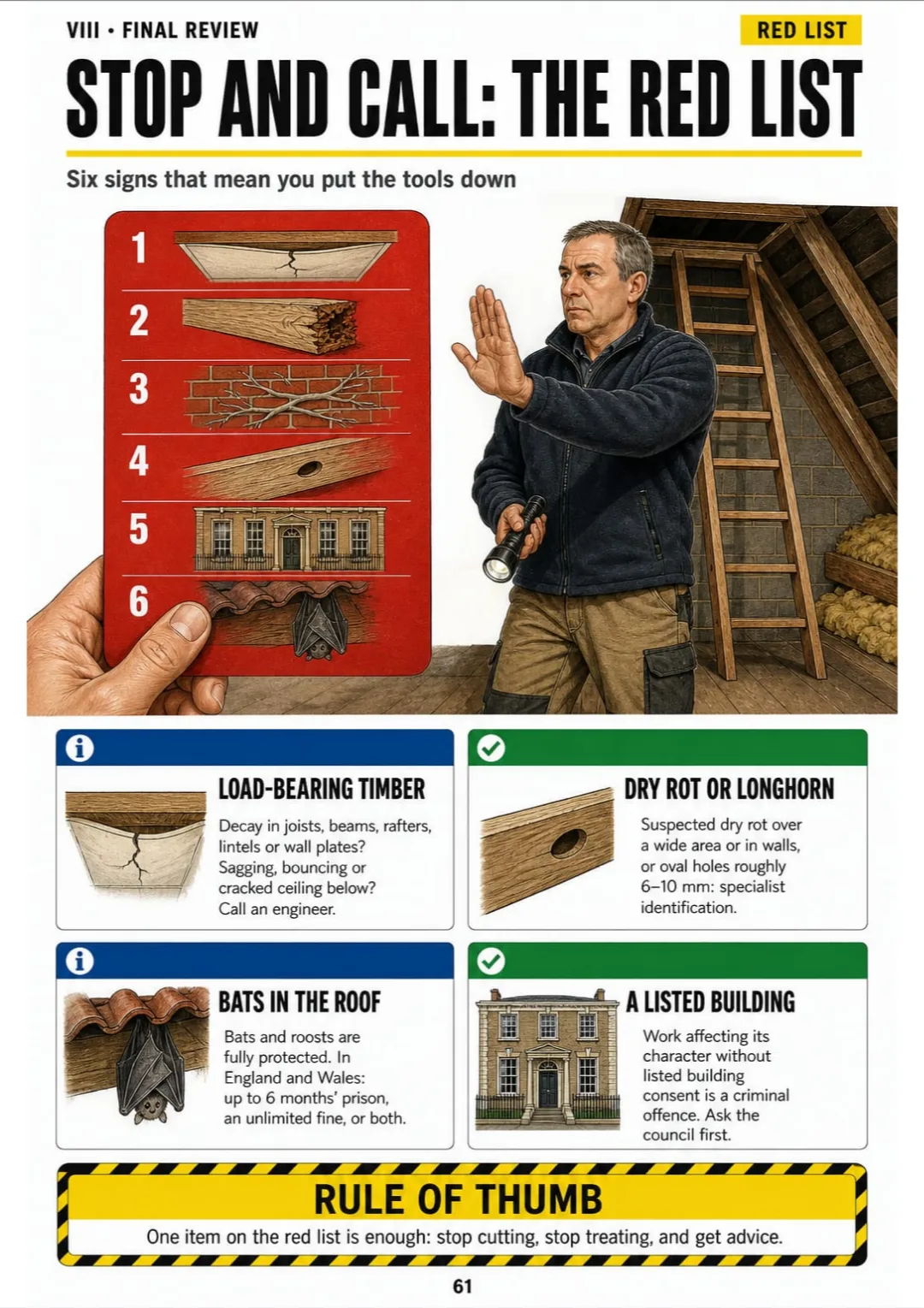
Every page has one large drawing and a box with the signs, thresholds and steps you need to know:


Swipe to see more →
These are real pages from the book. The table of contents is the full one: 8 parts and 62 topics.
You're up in the loft with a torch, looking at a joist covered in small round holes, with a little pale dust on the boards below. Is something still eating it, or did it finish decades ago?
You look it up and get pages of text about beetle life cycles, larvae and emergence, with no picture of what actually goes on inside the wood. Explained only in paragraphs, the holes stay a mystery.

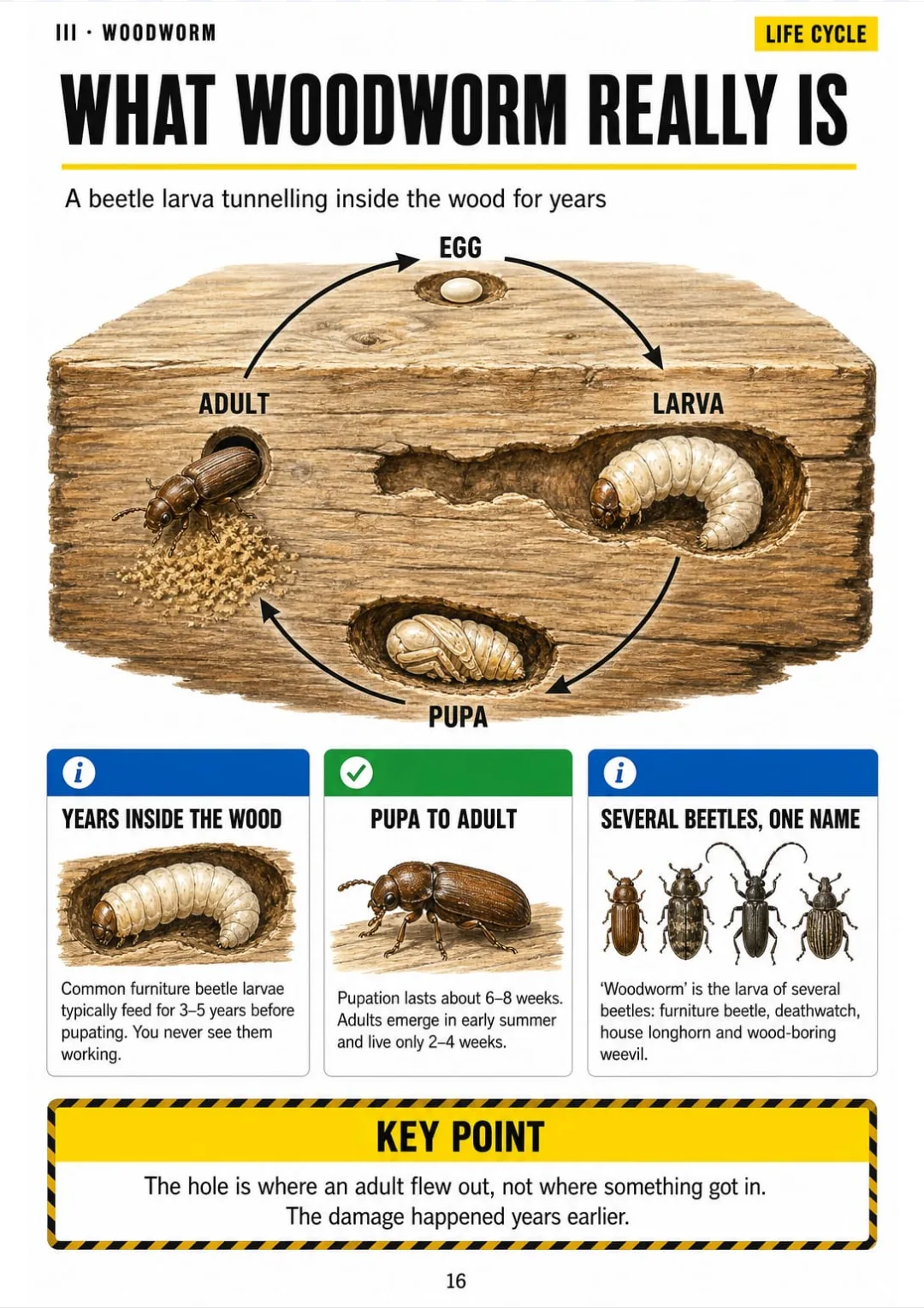
In the book, woodworm gets one page. One drawing of the timber cut open: furniture beetle larvae feeding inside for 3–5 years, then the adult chewing its way out. The hole you see is the way out. Old or active is the next page: the emergence test, drawn.
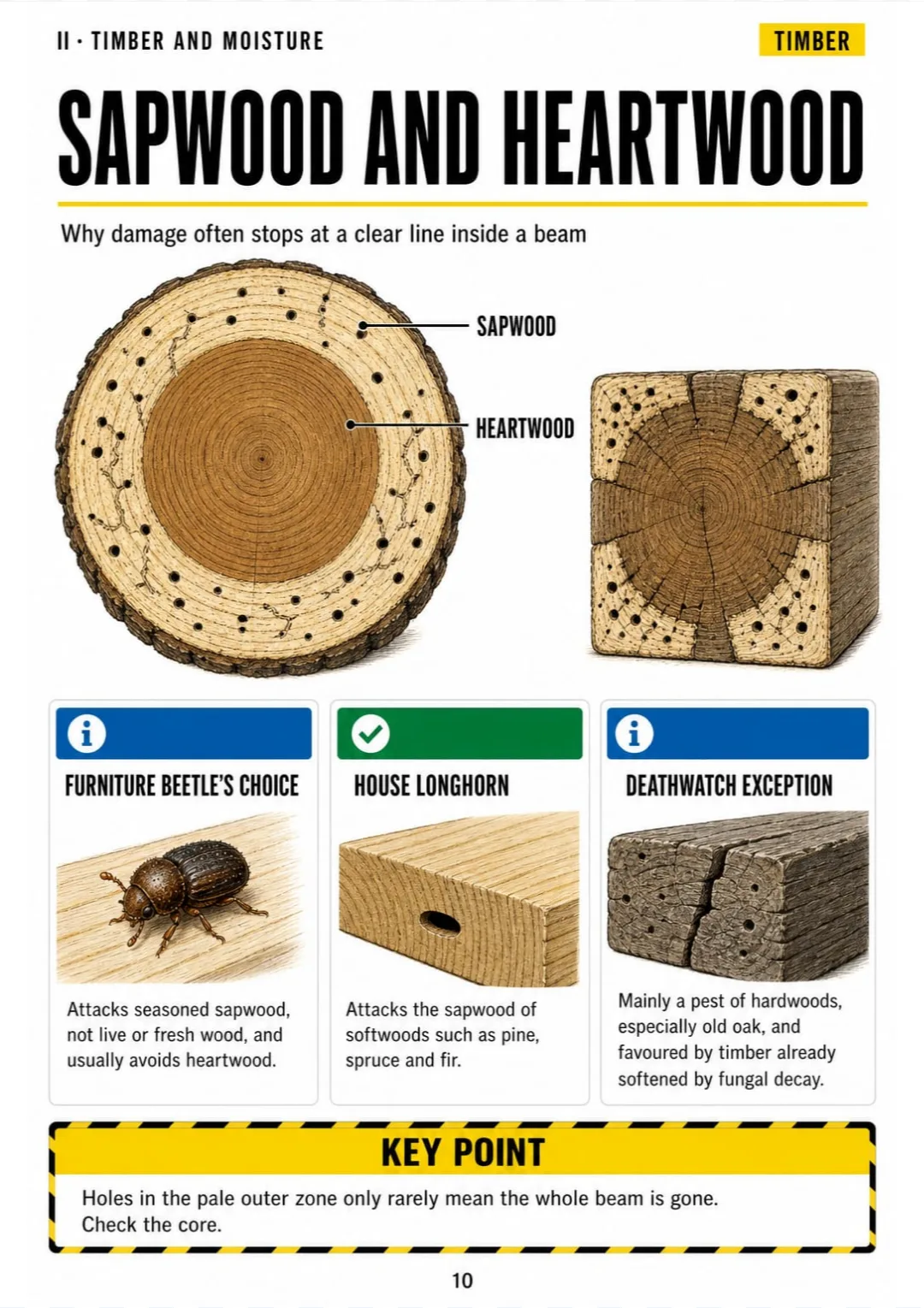
The other topics work the same way: sapwood and heartwood, old or active holes, wet rot strands, a bridged DPC, cutting back to sound timber. Each one has its own page.
Next time you're in the loft, you can read that joist yourself and know what to check next, without going back to the forums.

Start here, timber and moisture, woodworm, wet rot and dry rot, finding the damp, drying and treatment, repairs, and when to stop: 66 pages, all illustrated.
Think of it this way:
The survey says 'possible timber decay' and you've lifted a floorboard by the back door. The joist underneath is dark, cracked and soft at the end. You want to know what it is before anyone quotes for the work.
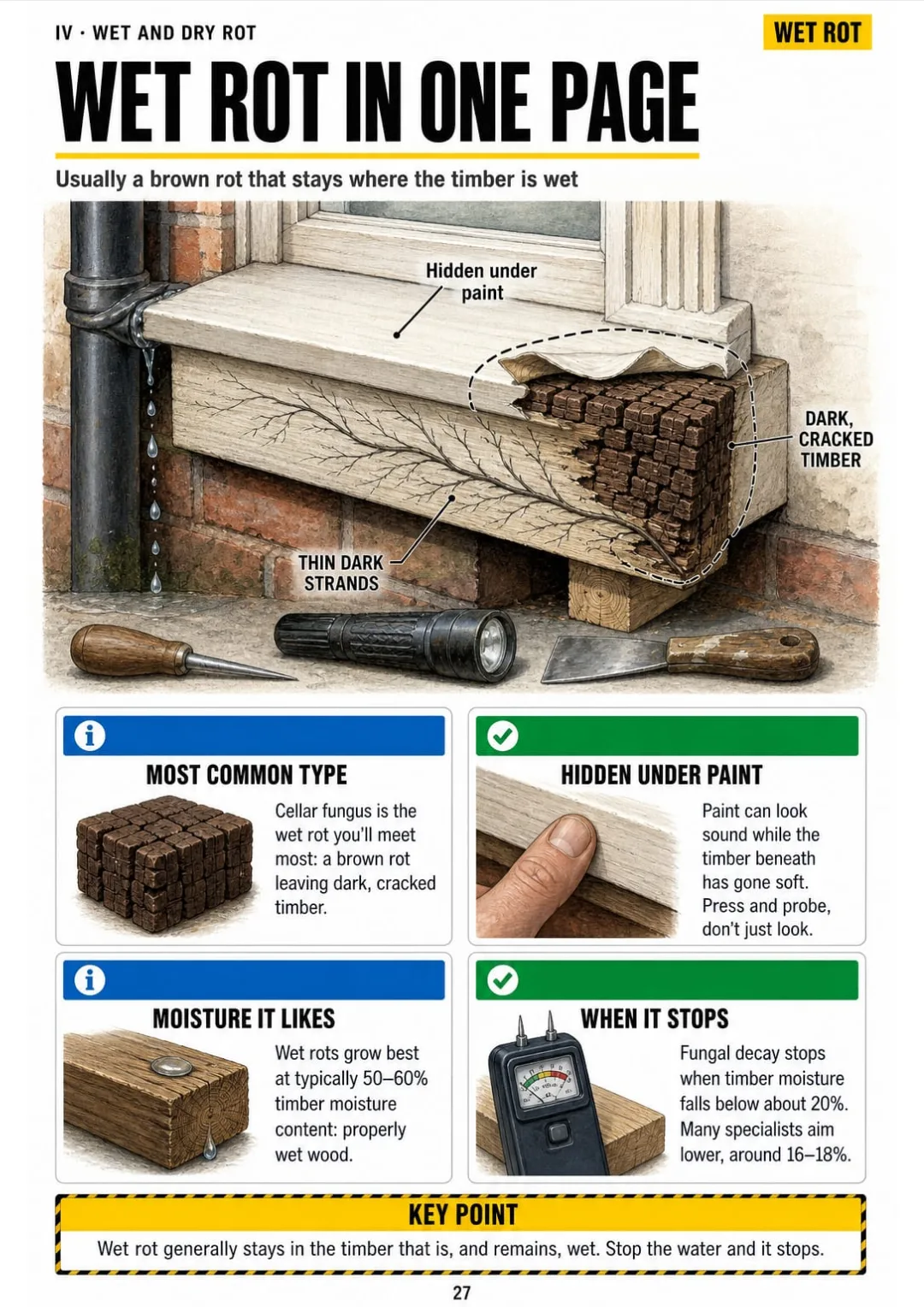
You open the book at the wet rot page and there it is, drawn: small dark brown cubes, thin dark strands, and the point where it stops, below about 20% moisture.

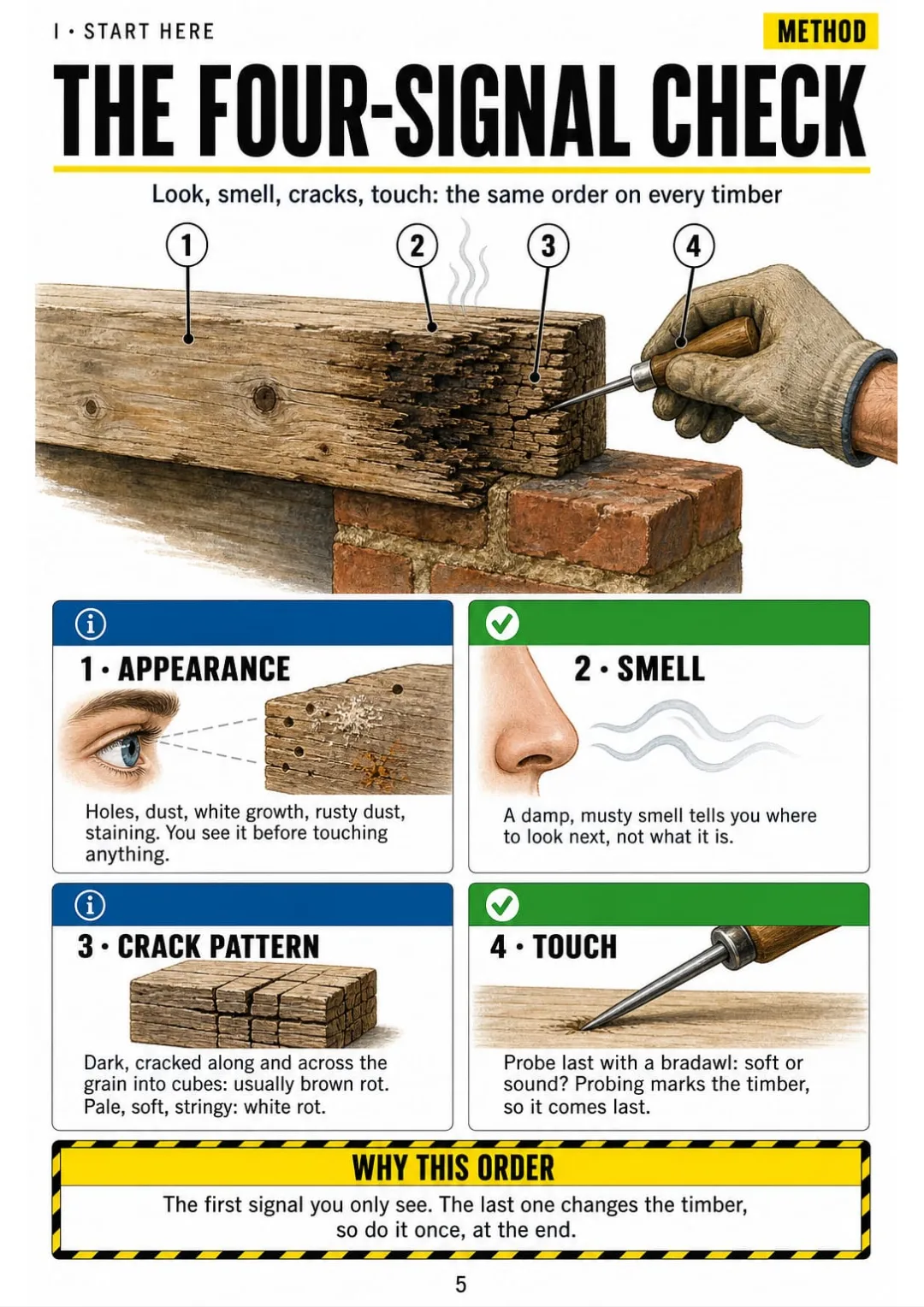
The same goes for dry rot strands, crack patterns compared, ground levels and a bridged DPC, the bradawl and splinter test, and the red list of when to stop. Each one is on its own page.
Woodworm, Dry Rot & Wet Rot Illustrated is 8 parts and 62 topics, all drawn, ending with a quick review of the four signals and the seven steps.
What you see drawn, you don't have to memorize.
The four-signal check, the three culprits side by side, the seven-step method, your inspection kit and safety before you go up or down.
Sapwood and heartwood, the timbers in an older British home, moisture content in plain words, reading a pin meter, where timber stays wet, brown rot and white rot.
What woodworm really is, furniture, deathwatch and house longhorn beetles, weevils and lookalikes, exit holes, old or active, the emergence test and when it becomes structural.
Wet rot and dry rot one page each, cotton wool growth and silky skin, strands, fruiting body and rusty dust, crack patterns, smell and touch, lookalikes and where dry rot hides.
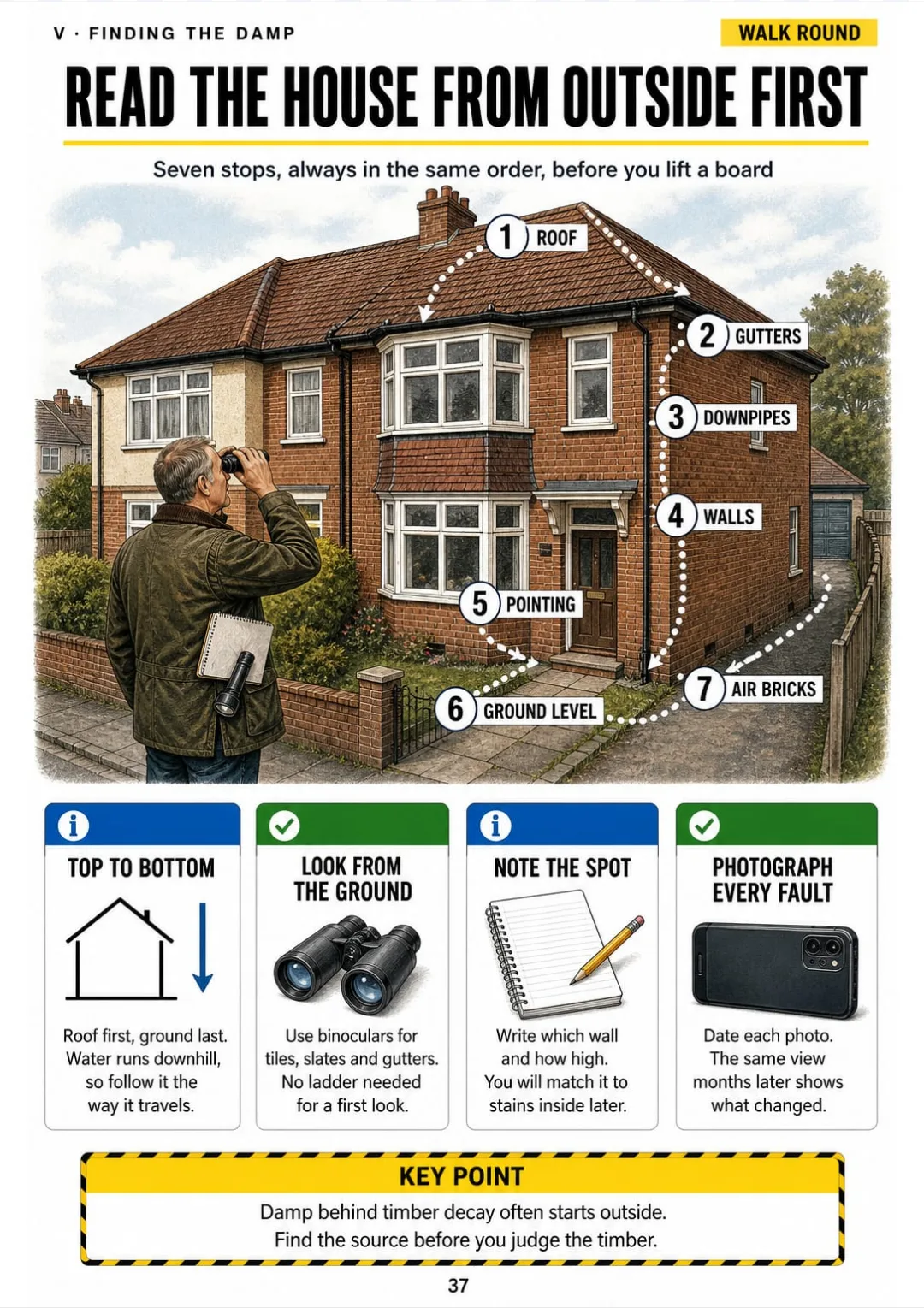
Reading the house from outside, gutters and downpipes, ground levels and a bridged DPC, air bricks, plumbing leaks, condensation, solid walls, damp in the loft and mapping readings.
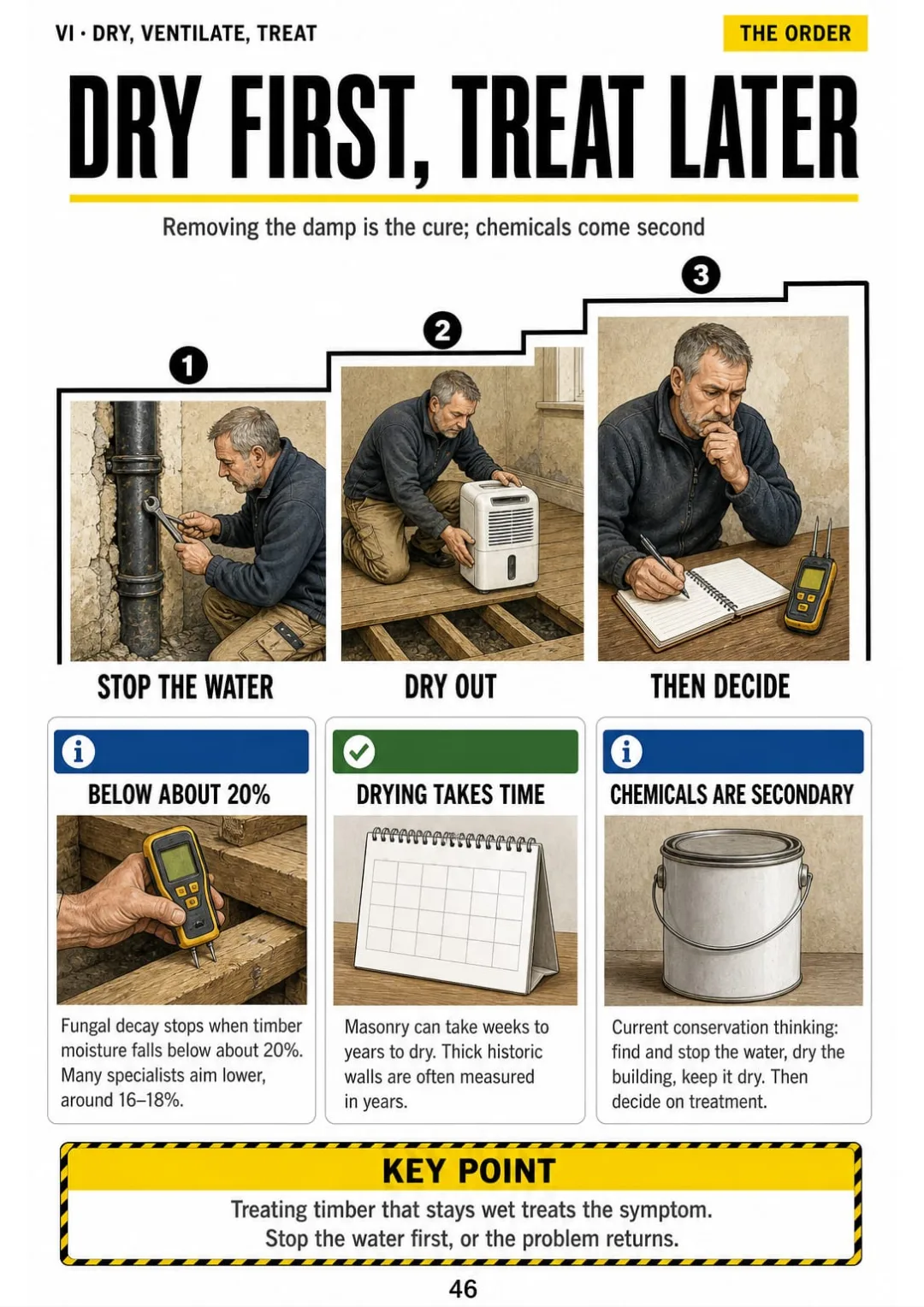
Dry first and treat later, helping timber dry out, dry rot old practice and current thinking, whether you need a chemical at all, reading a treatment label, bats, pets and ponds.
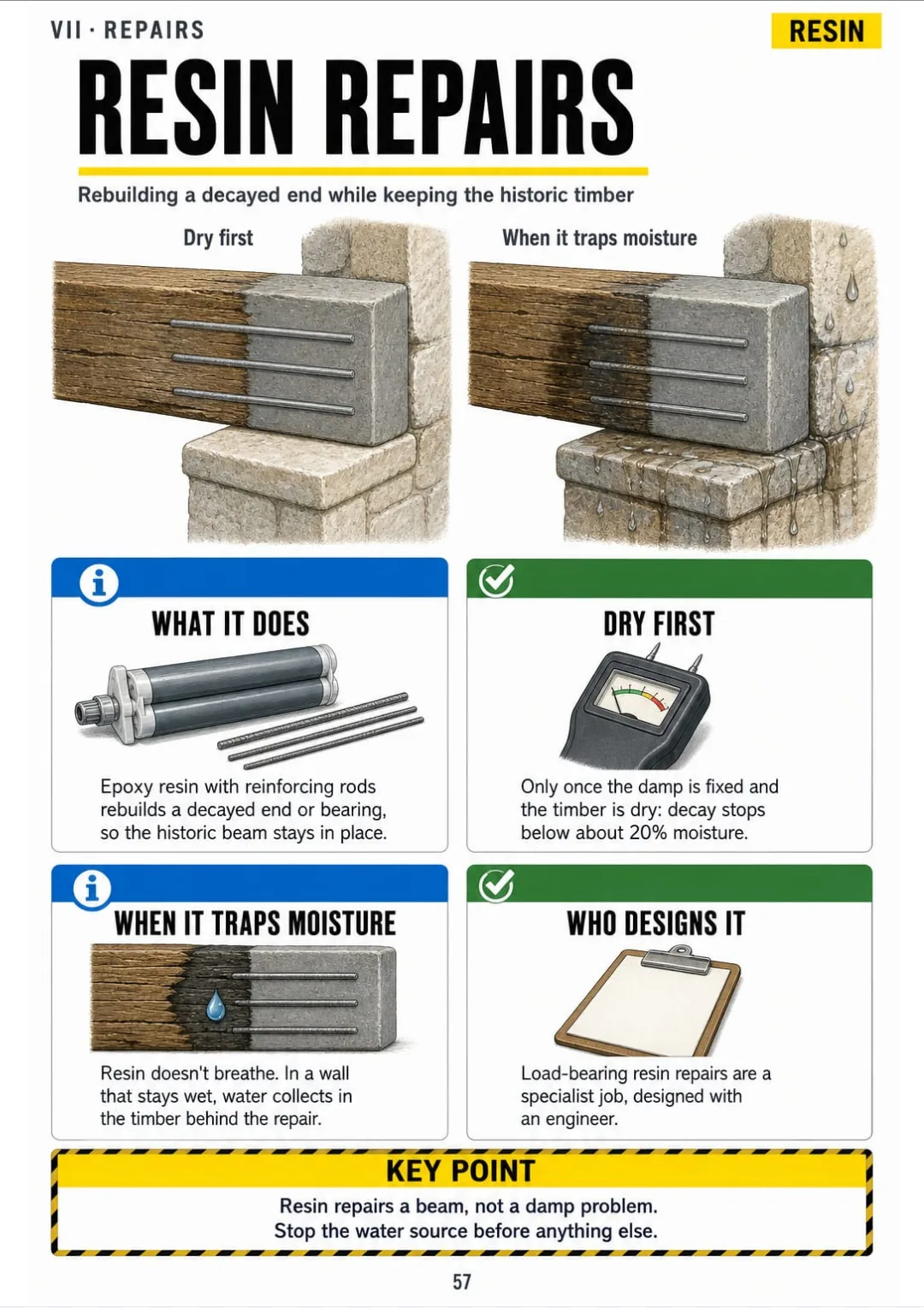
Cutting back to sound timber, removing decay safely, sistering a joist, the scarf joint, joist ends in solid walls, resin repairs, skirting and wall plates, replacement timber and keeping it dry.
The red list of when to stop, who to call, listed buildings and conservation areas, reading your survey report and quick reviews of the four signals and the seven steps.
At the end of the book: A stop-and-call red list, a guide to reading your survey report and two quick-review pages.
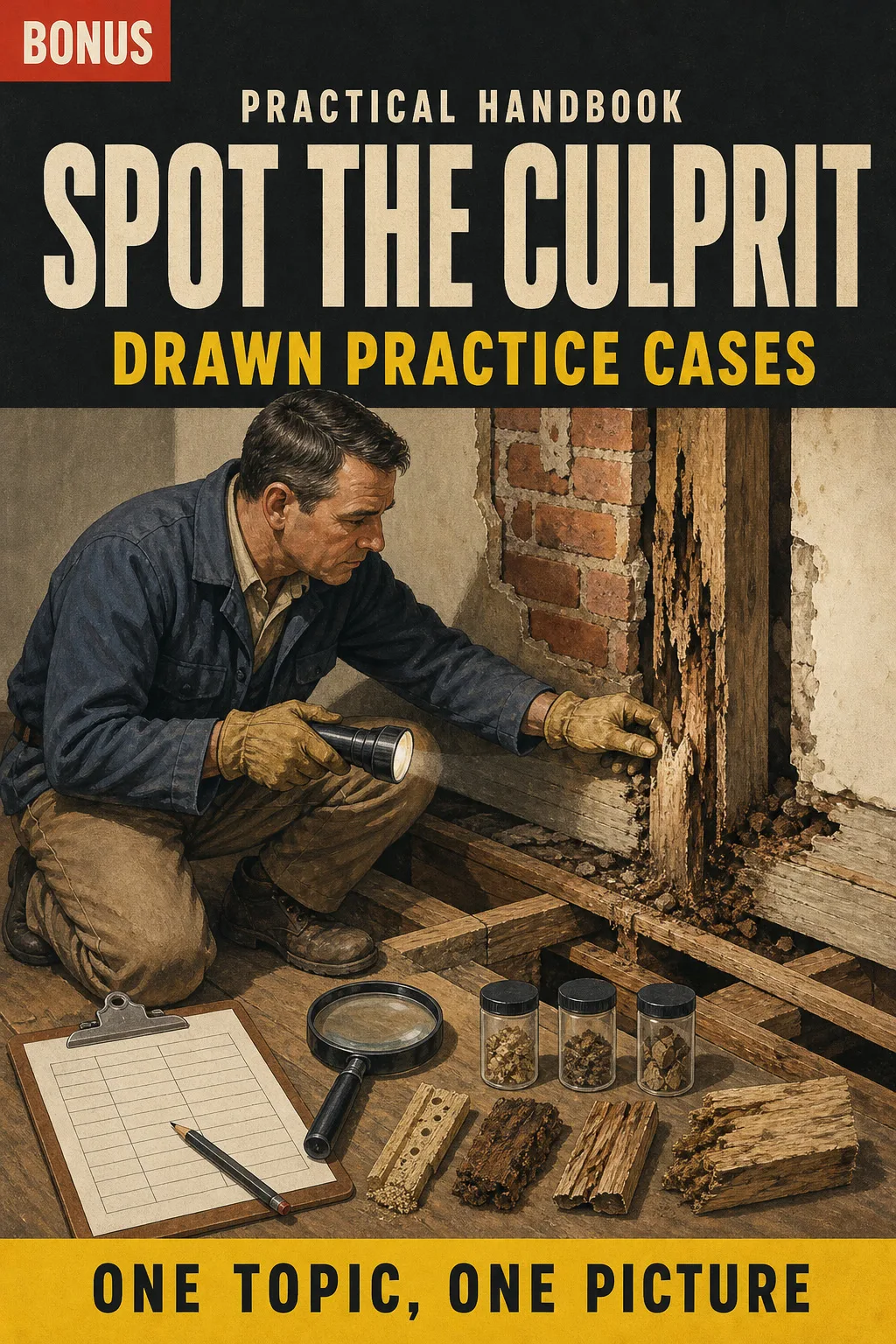
Practise on drawn cases (holes, dust, cracks, strands and stains), decide whether it's woodworm, wet rot or dry rot, then check your answer on the next page.

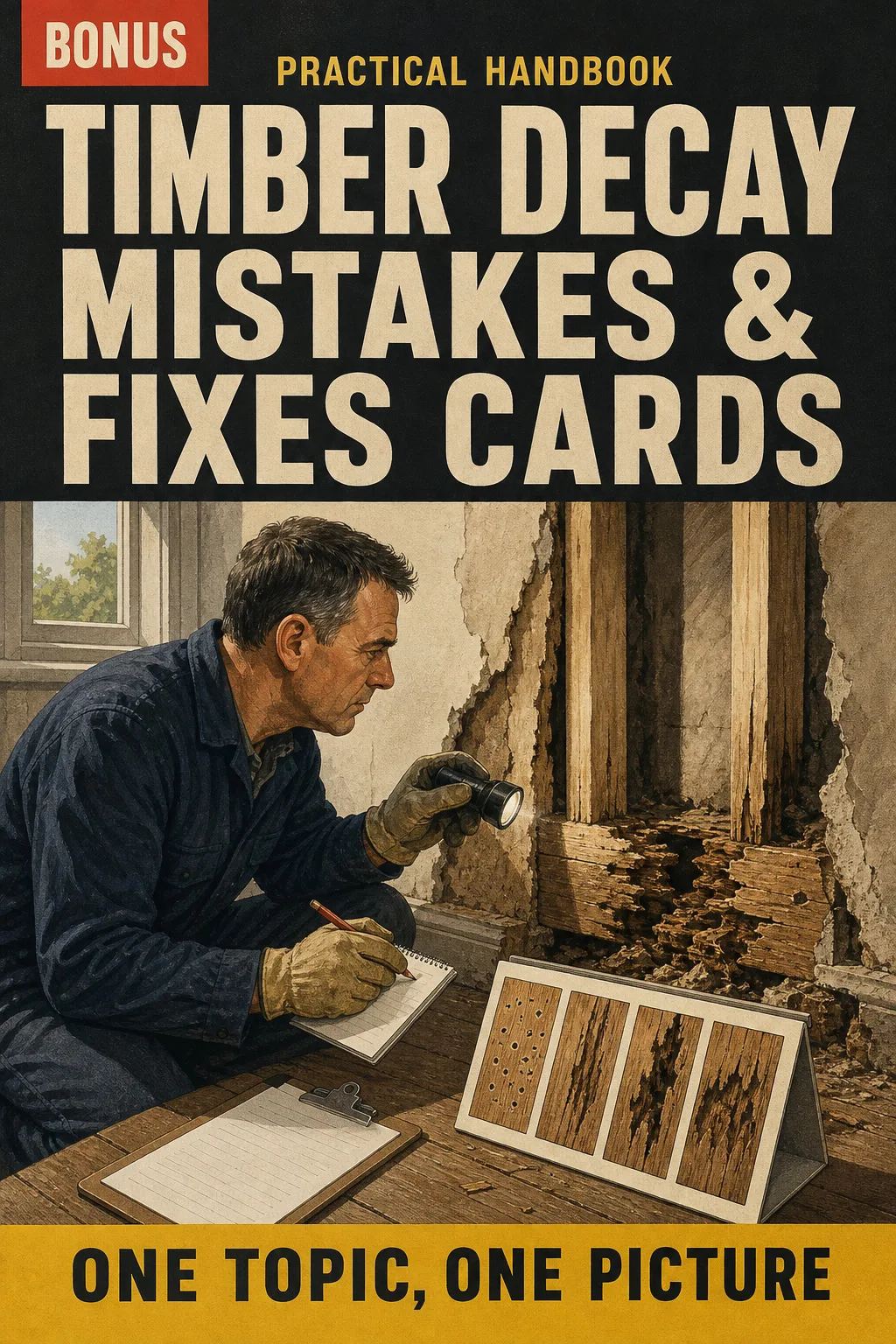
The most common mistakes, each on one printable card with the right way drawn next to it, ready to keep in your toolbox.
📄 This is a digital PDF book sent to your email: nothing is printed or shipped.
PDF by email: We email you Woodworm, Dry Rot & Wet Rot Illustrated as a PDF, together with the two free books. It's a single payment: no installments, no extra charges.
You check the joist with the four signals, in the same order, and see whether the holes are old or active before you buy any treatment.
You read the report with the right page open, know what each term means and know which questions to ask before you sign anything.
You find the damp, dry it out, cut back to sound timber and splice, with the red list telling you when to stop and call a specialist.
📄 This is a digital PDF book sent to your email: nothing is printed or shipped.
Try Woodworm, Dry Rot & Wet Rot Illustrated for 30 days, bonus books included.
We refund everything if the file won't open, if the book isn't what you see here, if you were charged twice or if the email doesn't arrive. Just email us.
You pay once. No subscriptions.
Yes. It's written for owners of older British homes who do their own repairs, not for joiners: each topic is one drawn page in plain words. The inspection kit page shows what to have: a torch, a bradawl and a basic pin moisture meter. It doesn't name brands: it shows you how to read a treatment label, and the red list tells you when not to do it yourself.
It's cross-checked against current Historic England guidance on timber decay and damp, BS 7913 for the overall approach and Approved Document C for damp-proof courses and ground levels (England; Wales has its own version). The timber and damp checks are the same across the UK, but Scotland and Northern Ireland have their own building regulations, so check local rules before any damp-proofing work.
No. It's an independent illustrated guide. It isn't published, approved or endorsed by Historic England or any other body.
No. It helps you understand what you're looking at and plan the work. It includes a red list of signs that mean stop and call a structural engineer or timber specialist.
No. The cases in ‘Spot the Culprit: Drawn Practice Cases’ are drawn and written for this book. They aren't official test material or anyone's survey.
The book and the 2 bonuses arrive as PDFs by email, to the address you enter at checkout.
No. It's a one-off payment, with no subscription.
Yes. It's a PDF laid out for printing, so you can print the pages you need and take them up to the loft.
You have 30 days. We refund everything if the file won't open, if the book isn't what you see on this page, if you were charged twice or if the email doesn't arrive: just email us.
No more rereading forum threads that contradict each other.
No more guessing whether the holes are old or active.
No more agreeing to a spray before you know where the water comes from.
Drawings make studying faster.
The book is right below.
One-time payment: US$ 27 · Guarantee: 30 days · PDF by email
YES, I WANT WOODWORM, DRY ROT & WET ROT ILLUSTRATED FOR US$ 27📄 This is a digital PDF book sent to your email: nothing is printed or shipped.